


Peru’s far north has quietly become the country’s true tropical beach playground, with warm water, palm-fringed bays and a spread of resorts that finally match the scenery. From laid-back surf hostels in Máncora to secluded all inclusive stays in Punta Sal and Zorritos, the Piura and Tumbes coasts now offer Peru’s strongest beach-holiday market, with genuine year-round demand for family-friendly hotels, romantic bungalows and affordable oceanfront stays.
Why Northern Peru Is The Country’s Real Beach-Hotel Strip
Northern Peru’s coast around Máncora, Vichayito, Punta Sal and Zorritos combines warm Pacific water with relatively reliable sunshine, something the cooler central and southern beaches of Peru cannot always guarantee. Sea temperatures between roughly 24 and 26 degrees Celsius from November to May, and still usually above 20 degrees the rest of the year, make this stretch popular with both Peruvians and international visitors seeking a genuine swim-friendly beach break rather than a chilly dip.
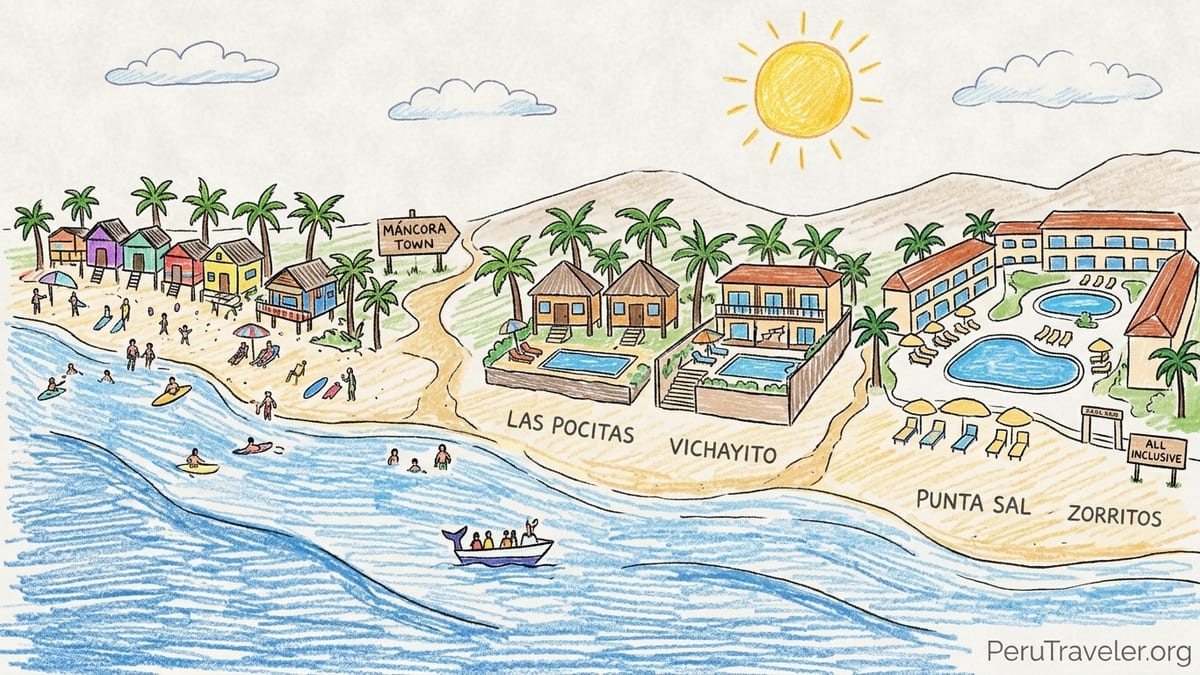
Tourism authorities have long highlighted Máncora and Punta Sal as the country’s main beach destinations, and hotel investment has followed. Today the region offers a dense mix of simple surf lodges, mid-range boutique hotels and large-scale resorts, particularly between central Máncora, the quieter Las Pocitas area to the south, the resort strip at Vichayito and the more spread-out resorts on the Tumbes coast near Punta Sal and Zorritos. For many travelers planning a Peru itinerary that already includes Machu Picchu and the Andes, adding five to seven nights in this northern strip is the easiest way to finish with a warm-water beach stay without leaving the country.
At the same time, choice can be confusing. Names such as Máncora, Las Pocitas and Vichayito are often used interchangeably in marketing, even though they refer to distinct stretches of coast with different surf conditions, noise levels and distances from nightlife. Understanding these differences, and how specific properties like Arennas Máncora, DCO Suites and Aranwa Vichayito Beach Resort fit into the puzzle, helps you pick the right base for your style and budget.
This guide focuses on the main resort clusters used by international travelers: central Máncora for restaurants, nightlife and independent stays; Las Pocitas for upscale villas and quieter hotels; Vichayito for relaxed couples resorts; Los Órganos and Punta Veleros for peaceful lodgings and marine excursions; Punta Sal for family-oriented resorts including all inclusive options; and Zorritos for a more low-key Tumbes experience.
Understanding Resort Types and What “Beachfront” Really Means
On Peru’s northern coast, seemingly similar hotels can operate on very different meal plans. All inclusive resorts, such as the Royal Decameron Punta Sal and some packages at Punta Sal Suites & Bungalows Resort, typically include buffet meals, local drinks, snacks and on-site activities in a single daily rate. These properties appeal to families and groups who prefer to pay most costs up front and spend minimal time budgeting for restaurants, though premium excursions and imported drinks usually cost extra.
Breakfast-inclusive or “bed and breakfast” resorts are more common around Máncora, Las Pocitas and Vichayito. Places such as Arennas Máncora, DCO Suites Lounge & Spa and Aranwa Vichayito Beach Resort usually include a substantial breakfast in the nightly rate, with à la carte lunches and dinners charged separately. This model works well in areas with independent restaurants a short taxi ride away, or for guests who want the freedom to mix hotel dining with cevicherías and beach shacks in town.
Villas and apartments, especially in Las Pocitas and parts of Vichayito and Punta Sal, range from simple beachfront houses rented through local agencies to serviced villas that belong to larger resorts. These give more space and kitchen facilities, ideal for groups or longer stays, but they often increase hidden costs. You pay separately for groceries, cleaning and any restaurant meals or excursions, and if the property is remote you might pay repeated taxi fares into Máncora or Cancas for dining and shopping.
Budget travelers gravitate to inexpensive hostels and small guesthouses in central Máncora and Los Órganos. These might cost from around 12 to 25 US dollars per person per night in shared dorms or basic private rooms, often with fans rather than air conditioning and social bars that stay noisy until late. Many are near good surf breaks, but they are rarely right on a calm swimming beach. When comparing “beachfront” descriptions, always check whether the water immediately in front of the hotel is safe and comfortable for swimming. Some stretches of open beach near Máncora and Vichayito have stronger waves and currents that suit surfing more than relaxed floating for children.
Máncora: Nightlife, Surf and Independent Beach Stays
Máncora town, in the Piura region, is the liveliest hub on Peru’s northern coast, with a long sandy beach, warm water, a main street lined with cevicherías and pizzerias, and late-opening bars and clubs. The central beach near the town pier sees the most activity and can feel crowded and noisy, especially on weekends and holidays. This area is best for travelers who want to walk to restaurants, surf schools and nightlife, and who do not mind music and street noise filtering into their room.
Most higher-end resorts sit slightly outside the center, either toward Las Pocitas or north along the main road, which balances access to town and quieter nights. DCO Suites Lounge & Spa, often simply called DCO Suites, is an adults-oriented beachfront hotel a short drive south of central Máncora, technically on the coastal stretch that begins to transition toward Las Pocitas. Recent listings for stays in 2026 show starting prices for two adults around 150 to 160 US dollars per night, including breakfast and taxes, though rates shift with season and promotions. Rooms are contemporary and compact, with air conditioning, ocean views and direct beach access, and the small pool and spa create a private-feeling enclave suited to couples who still want to taxi into Máncora for dinner and drinks.
Closer to the action, mid-range boutique properties and guesthouses near the main road and beach offer good value. Hotel Del Mar Máncora, also known as Suites del Mar, sits right on the sand near the main surf area and advertises 22 rooms, an infinity pool overlooking the ocean, direct beach access and Starlink internet. It positions itself as a boutique hotel with categories ranging from standard rooms to a Royal Suite with private plunge pool or jacuzzi. Public price grids are not always published, but sample rates obtained through major booking engines for 2026 dates suggest a spread roughly between 110 and 220 US dollars per night depending on room type and season, usually with breakfast included.
For budget travelers, central Máncora still has numerous hostels and small hotels clustered near the highway and beachfront. Dorm beds in social hostels often appear from around 12 to 18 US dollars per person per night, and basic private doubles with fans from about 30 to 45 US dollars. These properties vary widely in quality, and many sit immediately beside bars or on the Panamericana Norte highway, so light sleepers should check recent reviews for comments about noise and consider staying just outside the town center instead.
Las Pocitas: Quiet Villas and Upscale Beachfront Hotels
Las Pocitas lies roughly five to six kilometers south of central Máncora along the same strip of coast, technically still within the district but very different in mood. Here the main road runs slightly inland while villas and small hotels line a quieter, palm-backed beach. The area is known for shallow rock pools at low tide and softer scenery than the bustling town beach, with fewer day-trippers and vendors.
Arennas Máncora is the marquee property in Las Pocitas and a key benchmark when comparing Peru’s northern beach resorts. Located around kilometer 1213 of the Panamericana Norte, a short drive from Máncora, it occupies an extensive beachfront plot with a long pool, clean modern rooms and villas, and direct access to the sand. Partners and online agencies show a wide spread of nightly prices in 2026, often starting around 180 to 220 US dollars for standard rooms in low season and rising higher for suites and peak holiday periods. Some promotional material from Peruvian partners indicates special discounts off the daily rate for certain cardholders, which can bring down the effective price for locals but usually does not apply to foreign visitors booking internationally.
Rooms at Arennas Máncora typically include air conditioning, contemporary bathrooms and terraces or balconies, with categories that open directly toward the pool and beach. The property operates on a breakfast-inclusive basis, with an on-site restaurant and bar for other meals. Guests praise the long pool and uncluttered beach frontage, while some note that taxi rides into central Máncora add to overall costs, especially for travelers who like to dine out frequently. Expect a 10 to 15 minute transfer by mototaxi or car, with one-way costs that may sit in the equivalent of a few US dollars, multiplied by multiple trips in a five-night stay.
Las Pocitas also hosts numerous independent villas and smaller boutique hotels positioned directly on the sand or just behind the first line of properties. Some are rented as whole houses, sleeping six to ten guests with private plunge pools and kitchens. A three-bedroom beachfront villa in this area can cost from the equivalent of 250 to 450 US dollars per night in busy months, which can be economical for a group of friends or an extended family compared with booking multiple hotel rooms. The trade-off is that you will need to organize your own groceries or pay for private chefs and cleaners, and dining out always involves a short ride to Máncora or nearby restaurants rather than a simple stroll down a boardwalk.
Vichayito, Los Órganos and Punta Veleros: Relaxed Resorts and Marine Excursions
South of Las Pocitas, Vichayito and the neighboring area around Los Órganos and Punta Veleros form a quieter band of low-rise hotels and bungalows along a broad beach, with a more open ocean feel and popular whale-watching and marine-excursion operations. This stretch appeals strongly to couples and families who prefer a softer pace but still want access to activities such as humpback whale tours between roughly July and October or visits to nearby offshore reefs.
Aranwa Vichayito Beach Resort, also known as Vichayito Bungalows & Carpas by Aranwa, sits directly on the sand at Vichayito and features a mix of bungalows with solid walls and canvas-roofed “tented” suites, all oriented toward the sea. Official information presents the property as a beachfront retreat with pool, spa and restaurant, and current price samples from international booking platforms in 2026 show a band roughly between 180 and 230 US dollars per night for standard double occupancy, tax included, with breakfast. In promotional periods, some channels display temporarily lower rates or “getaway deals” that drop certain dates closer to about 150 to 170 US dollars, but these should be treated as limited offers rather than guaranteed year-round pricing.
Rooms and bungalows at Aranwa Vichayito come with air conditioning, private bathrooms, terraces and sea views in most categories, while common areas include a sizable pool area facing the ocean and direct beach access. The beach itself here is generally open and swimmable, though waves can be more active than in some coves near Punta Sal. Families should watch children near shorebreak at higher tides, but many guests report pleasant swimming conditions on calmer days. Compared with Máncora, nightlife options near the resort are limited, so evenings usually center on the hotel bar and restaurant unless you are willing to take a taxi north to Máncora for dinner.
Nearby Los Órganos town is much smaller than Máncora and serves mainly as a fishing hub and base for boat excursions. Punta Veleros, just to the north, hosts a collection of small hotels and guesthouses on a protected bay that tends to feel more tranquil. Prices here can be lower than in Máncora and Las Pocitas, with simple beachfront guesthouses for couples sometimes available in the 60 to 110 US dollar range per night with breakfast. Several operators in Los Órganos offer whale-watching trips and visits to nearby coves, and staying in this area can cut travel time to the dock, but the trade-off is fewer dining options and almost no nightlife after dinner.
Punta Sal and Zorritos: Tumbes Coast Resorts and All Inclusive Options
Farther north in the Tumbes region, Punta Sal and Zorritos form the core of Peru’s all inclusive and larger-scale resort scene. The beaches here are known for long swaths of light-colored sand and calm, warm water, with Punta Sal in particular often cited as one of the country’s best swimming beaches thanks to its position on a gently curving bay. The main resort zone of Punta Sal is divided roughly between smaller independent hotels, such as Punta Sal Suites & Bungalows Resort, and large all inclusive complexes like the Royal Decameron Punta Sal.
The Royal Decameron Punta Sal occupies an extensive beachfront property near the village of Zorritos, marketed as an all inclusive resort with multiple pools, buffet and à la carte restaurants, bars, organized activities and evening entertainment. Documentation from the resort and partner agencies confirms the all inclusive model, where guests pay a per-night fee that covers most on-site food, local alcoholic and non-alcoholic drinks, use of pools and sports facilities, and participation in scheduled entertainment. Exact prices vary widely by date and origin of package. For Peruvian and regional travelers booking air-inclusive packages, five-night stays for two adults sometimes appear in promotions that bundle flights from Lima, transfers and all inclusive accommodation for amounts that can compare competitively with separate bookings. For international visitors who already have flights arranged, room-only prices in 2026 quoted through some third-party channels suggest rough ranges between about 200 and 320 US dollars per room per night, depending on season and view, but these figures should be checked directly at time of booking due to frequent package-oriented pricing.
Punta Sal Suites & Bungalows Resort, located directly on the main Punta Sal beach, operates somewhat differently. It offers rooms, suites and bungalows in a beachfront setting with pools and on-site dining, and agencies publish packages for 2026 that include breakfast only or half board, as well as options bundling ground transfers from nearby airports. Price sheets aimed at Peruvian travelers indicate that five-day packages with meals and transfers can be cost-effective for families who want structure but do not require a full all inclusive format. Non-package nightly rates for foreign travelers sent through mainstream booking platforms tend to cluster from roughly 170 to 250 US dollars per room for double occupancy in 2026, with family suites costing more.
Zorritos itself is quieter than Punta Sal, with a more spread-out collection of small hotels, eco-lodges and mid-range resorts lining the highway and beach. Some of these properties operate closer to the 70 to 140 US dollar per night bracket for double rooms including breakfast, making the area appealing to travelers who want warm water and calmer surroundings without paying top-tier resort prices. The trade-off is that independent restaurants are more limited than in Máncora, and nightlife tends to be very low-key, often ending with a drink at the hotel bar or a walk along the beach rather than bar-hopping.
Flights, Transfers and the True Cost of Isolation
Travelers from Lima and abroad typically reach Peru’s northern beaches via three main airports: Piura, Talara and Tumbes. Piura, the largest city in the region, sits farthest from the beach zones but often has the highest number of flights and sometimes the lowest fares. Driving times from Piura to Máncora can run around three and a half to four hours, depending on traffic and stops. Talara lies closer, with drive times of roughly one and a half to two hours to Máncora and slightly more to Punta Sal. Tumbes, near the Ecuador border, is the closest airport to Punta Sal and Zorritos, with many transfers taking roughly one and a quarter to two hours to the main resorts, though exact times depend on road conditions and the specific property.
Major Peruvian airlines regularly adjust their schedules and prices, but sample fares checked for the Lima to Talara and Lima to Tumbes routes in late 2026 for shoulder-season dates show one-way prices often starting in the equivalent of 50 to 120 US dollars per person before baggage fees, with higher rates in peak holiday periods such as New Year and Easter. Because flight prices fluctuate quickly, travelers should treat these figures as general reference points and confirm current fares when planning.
Once on the ground, pre-arranged transfers from airports to resorts can significantly increase the total cost of a beach holiday, especially for remote properties. Some all inclusive resorts and upscale hotels in Punta Sal and Vichayito offer transfer services bundled into packages for Peruvian residents, but international guests often find themselves paying separately. As an example, a private taxi from Tumbes airport to a large resort near Punta Sal for two adults and two children could cost in the range of 60 to 100 US dollars each way depending on vehicle type and negotiation, while shared shuttles, when available, reduce the per-person expense but increase travel time through hotel drop-offs. Transfer costs from Talara to Máncora or Las Pocitas may sit slightly lower but still add a noticeable amount when calculated round-trip for a family.
Staying in an isolated resort magnifies these transfer costs, because every off-property excursion or dinner involves another taxi ride. Guests at Arennas Máncora, for instance, often take mototaxis or regular taxis into Máncora town for meals or nightlife, which is inexpensive per ride but adds up over five nights. In Punta Sal and Zorritos, guests who choose smaller hotels outside the main clusters may find that local taxi prices are higher due to longer distances and fewer vehicles. When comparing an all inclusive resort like Royal Decameron Punta Sal with a breakfast-only boutique hotel in Máncora, travelers should include not just the room rate and meals but also airport transfers, in-resort taxi rides, and any day trips when calculating the overall value.
Five-Night Cost Comparison: Couples and Families
To illustrate how the choice of resort and location affects the total cost of a five-night stay, consider approximate sample scenarios for travel in a shoulder season. All figures here are indicative ranges based on 2026 rate samples from major booking platforms and local packages, not fixed quotations.
For a couple seeking a romantic but not ultra-luxury stay near Máncora with some nightlife access, a five-night booking at DCO Suites Lounge & Spa might fall in the range of 750 to 900 US dollars for a standard suite with breakfast, assuming rates of around 150 to 180 US dollars per night. Adding five dinners for two in Máncora or at the hotel, at perhaps 25 to 40 US dollars per meal including drinks, yields an extra 125 to 200 US dollars. Airport transfers from Talara, hired privately, could add around 120 to 180 US dollars round trip for the couple. In this scenario, a realistic budget for accommodation, breakfasts, most dinners and basic transfers could land roughly between 1,000 and 1,300 US dollars, excluding flights to the region and discretionary tours.
The same couple staying at Aranwa Vichayito Beach Resort might pay closer to 900 to 1,200 US dollars for five nights on a breakfast-inclusive basis, if nightly rates hover between 180 and 230 US dollars depending on dates and promotions. Because the resort is more isolated from town restaurants than central Máncora, they may dine on-site more frequently at somewhat higher per-meal prices, which could push food costs up closer to 35 to 50 US dollars per dinner for two. Transfers from Talara or Piura would be similar or slightly more expensive than to Máncora. The trade-off is fewer taxi rides for nightlife and more time simply staying on property.
For a family of four, all inclusive resorts in Punta Sal can sometimes offer better value despite higher sticker prices. A five-night stay at Royal Decameron Punta Sal for two adults and two children, with all meals and on-site drinks included, might fall in a broad range of roughly 1,400 to 2,000 US dollars for accommodation alone depending on the ages of children, room configuration and season, based on sample 2026 pricing viewed through package descriptions and typical per-room rates. Although this is higher than breakfast-only hotels, almost all main meals and many drinks are already covered, and families can minimize extra restaurant and snack costs. Round-trip transfers from Tumbes for four people could add 120 to 200 US dollars, but there should be fewer taxi expenses once checked in, because most activities are on-site.
By contrast, a family of four staying in a mid-range beachfront hotel in Máncora or Las Pocitas, such as a family suite in a boutique property, might pay something like 1,100 to 1,500 US dollars for five nights including breakfasts if nightly rates sit between 220 and 300 US dollars. Daily restaurant meals for four could easily add 50 to 80 US dollars per day for lunch and 60 to 90 US dollars per day for dinner, particularly if teenagers are involved, leading to perhaps 550 to 850 US dollars in additional food costs across the stay. With transfers and taxis layered on top, the total may approach or exceed what a similar family would spend at an all inclusive in Punta Sal, even before paid excursions.
The Takeaway
Northern Peru’s beaches offer one of South America’s best combinations of warm water, relaxed towns and increasingly polished resort infrastructure, but the right choice of base depends strongly on priorities. Máncora is ideal if you want a mix of surf, restaurants and nightlife, and do not mind some bustle and noise. Central beachfront hotels and hostels there are walkable to everything yet sit on a more crowded shore. Moving a few kilometers south to Las Pocitas buys calmer surroundings, wider strips of sand and stylish properties such as Arennas Máncora, at the cost of relying on taxis to reach town.
Vichayito and neighboring Los Órganos and Punta Veleros appeal to couples and families who prefer slower days by the pool and broader beaches with fewer vendors. Aranwa Vichayito Beach Resort in particular offers a polished, clearly beachfront option with strong couples appeal and easy access to whale-watching excursions. The trade-off is quieter evenings and a heavier reliance on hotel restaurants compared to Máncora. Further north, Punta Sal and Zorritos lean into the resort model, with the Royal Decameron Punta Sal and Punta Sal Suites & Bungalows Resort catering to travelers who want structure and convenience, especially families who like the predictability of all inclusive or half-board formats.
For honeymooners, the best choices are usually boutique or adults-oriented properties with direct beach access and calm atmospheres. DCO Suites near Máncora, Arennas Máncora in Las Pocitas and Aranwa Vichayito in Vichayito all match this profile, with comfortable rooms, pools, on-site dining and beaches that encourage slow walks and sunset drinks. Newlyweds who want more in-resort entertainment might lean to Punta Sal’s larger resorts instead, as long as they accept a more family-focused crowd.
Families with younger children often find Punta Sal or large resorts near Zorritos easiest, because shallow, calm water and ready-made kids’ activities reduce daily logistics. A five-night all inclusive package that includes transfers can simplify budgeting and minimize the need to organize separate meals and excursions. Surf-focused travelers and backpackers on tighter budgets should instead base themselves in Máncora or, for a quieter break between sessions, in Los Órganos, where simple guesthouses near good breaks keep costs down and social life centers on beach bars rather than resort complexes.
Travelers primarily seeking warm-water relaxation without crowds might feel happiest in Las Pocitas, Vichayito or the quieter ends of Zorritos, where most days can revolve around pool, hammock and occasional trips to nearby towns. In all cases, the key is to think beyond headline nightly rates and factor in transfers, taxi rides, meal plans and the real character of the beach outside your room, from surf-tossed stretches loved by board riders to peaceful, sheltered bays that invite easy swimming from dawn to dusk.
FAQ
Q1. What is the warmest time of year to swim on Peru’s northern coast?
The sea is usually warmest from about November to May, when surface temperatures often sit in the mid-twenties Celsius, but it remains swimmable most of the year compared with beaches farther south in Peru.
Q2. Which area should I choose if I want nightlife as well as beach time?
Máncora town is the best base for nightlife, with bars and clubs close to the main beach. Staying slightly outside the center, toward Las Pocitas or on the road south, lets you visit the nightlife but sleep somewhere quieter.
Q3. Are all beaches in Máncora and Vichayito safe for children to swim?
Many sections are fine on calm days, but some exposed stretches have stronger waves and currents. Parents should check local conditions, ask hotel staff for advice and supervise children closely, especially at higher tides.
Q4. How do all inclusive resorts in Punta Sal compare with breakfast-only hotels in cost?
All inclusive resorts usually have higher nightly rates, but they include most meals and drinks, which can make them competitive or even cheaper overall for families who would otherwise spend heavily on restaurants and snacks.
Q5. Is it better to fly to Piura, Talara or Tumbes for the northern beaches?
Talara is often the most convenient for Máncora, Las Pocitas and Vichayito, while Tumbes is best for Punta Sal and Zorritos. Piura can be cheaper for flights but requires a longer drive to reach the beach.
Q6. Do I need a car, or are taxis and mototaxis enough?
Most visitors rely on taxis and mototaxis rather than renting a car. This works well in and around Máncora and nearby beaches, but isolated resorts in Punta Sal or Zorritos can mean higher taxi costs for every off-property outing.
Q7. Are there truly budget options directly on the beach?
There are a few simple guesthouses and hostels with beachfront locations in and near Máncora and Los Órganos, but the very cheapest dorm-style places are more often just off the sand or closer to the highway.
Q8. How reliable is Wi-Fi in these northern coast resorts?
Wi-Fi quality varies. Upscale hotels such as Suites del Mar Máncora and many modern resorts now highlight stronger connections, sometimes using satellite services, but coverage can still be patchy in rooms or during peak usage times.
Q9. Is it worth paying extra for a beachfront room instead of a garden view?
Beachfront rooms offer direct views and faster access to the sand, which many guests value highly. Travelers who plan to spend most of the day by the pool or exploring can often save money by choosing a garden or partial sea-view room instead.
Q10. Are there good options for surfers who also want comfortable accommodation?
Yes. Staying near central Máncora or slightly south toward Las Pocitas gives surfers access to consistent breaks while still offering comfortable boutique hotels like DCO Suites and Arennas Máncora, plus easy transfers to quieter breaks near Los Órganos.