


The upper Amazon between Iquitos and the Pacaya Samiria National Reserve in Peru has become one of South America’s most compelling luxury expedition destinations. For 2026 and 2027, demand is especially intense for small premium vessels such as Delfin I, Delfin II, Delfin III and Aria Amazon, where cabins resemble boutique hotel suites and daily outings reach deep into flooded forest. Choosing the right ship and itinerary is a high‑value decision: prices for a couple can easily exceed several thousand dollars, and the differences in cabin design, routing, guiding and actual time in the rainforest are significant.
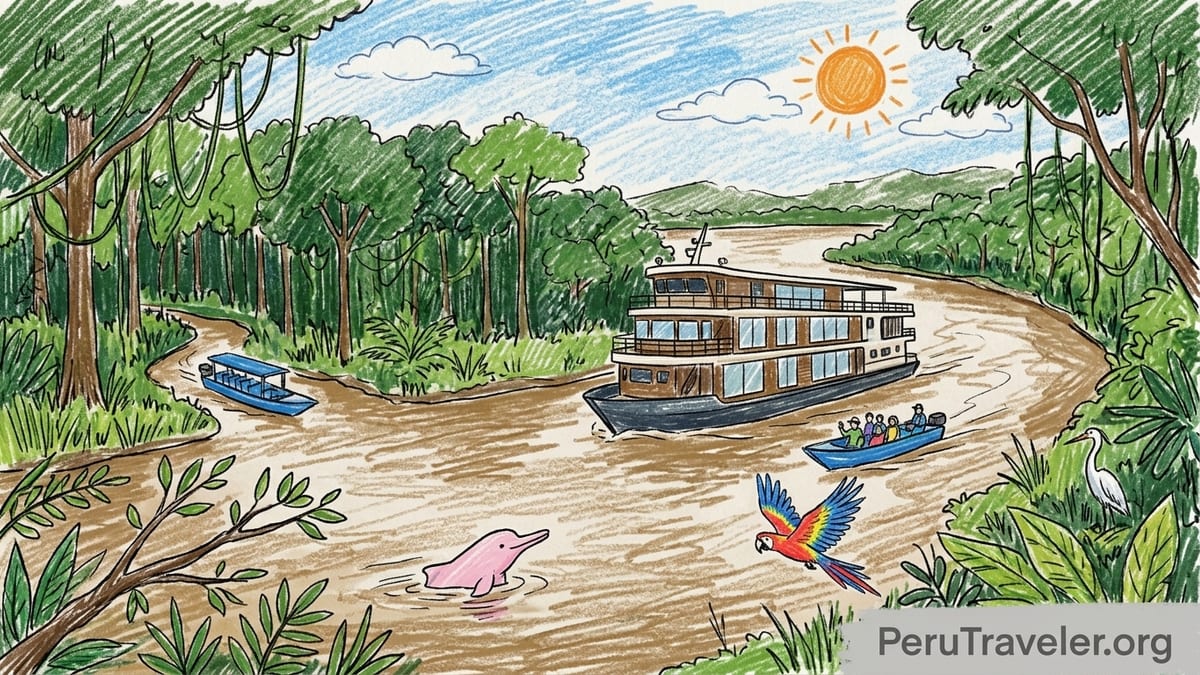
How Luxury Amazon Cruises Work From Iquitos and Nauta
Most high-end Amazon river cruises in Peru start with a flight into Iquitos, the largest city in the Peruvian Amazon and the main aviation gateway. From there, nearly all premium vessels run a two-hour road transfer south to the small river town of Nauta, where passengers embark and disembark. This pattern allows ships to spend far less time on busy stretches of the main Amazon River and more time on the Marañón and Ucayali systems that feed Pacaya Samiria National Reserve.
Pacaya Samiria is Peru’s largest protected flooded-forest reserve, with Nauta as the nearest city access point. Entry is tightly controlled, and visitors must be accompanied by authorized operators or local community groups. Luxury cruise companies such as Delfin Amazon Cruises and Aqua Expeditions (which operates Aria Amazon and sister ship Aqua Nera) hold formal agreements with Peru’s protected-areas authority that define which sectors of the reserve they may enter, which tributaries are open to their skiffs, and how many visitors are allowed per day. This is one reason these cruises command premium pricing: permits, compliance and logistics are costly.
From a traveler’s perspective, this means that the term “Amazon River cruise from Iquitos” can describe quite different routes. One vessel may spend most of its time on the Marañón River and creeks entering Pacaya Samiria, while another focuses more on the Ucayali and adjacent protected zones. Elite ocean-going expedition ships that occasionally sail all the way from the Atlantic to Iquitos in 18 to 20 days are a different product entirely and generally do not offer the same intensive, small-group skiff exploration as the Nauta-based boutique ships reviewed here.
The core of a Peru Amazon luxury cruise is the daily rhythm of early-morning and late-afternoon excursions in small motorized skiffs, backed by air-conditioned comfort and fine dining back on board. You are not simply “watching the jungle go by” from a deck chair. Instead, you move between narrow blackwater streams, oxbow lakes and flooded forest channels where wildlife densities are higher and large ships cannot reach. How often and how far you get into these side environments depends heavily on the vessel and itinerary you choose.
Delfin I, II, III and Aria Amazon: Fleet Overview and Cabin Design
Among vessels operating from the Iquitos–Nauta region in 2026–2027, four ships stand out for travelers seeking a true luxury experience: Delfin I, Delfin II, Delfin III and Aria Amazon. All are fully air conditioned, all are built or refitted specifically for the Peruvian Amazon, and all are marketed as all-suite or mostly-suite ships with large picture windows. Yet their scale and onboard atmosphere are very different.
Delfin I is the smallest, essentially an upscale Amazon yacht carrying only around eight guests in four oversized suites. Published commercial material for 2026 describes suites ranging roughly from about 340 to over 600 square feet, with floor-to-ceiling windows and private terraces. Two suites have plunge pools on the balcony. With such limited capacity, Delfin I appeals strongly to honeymooners, photographers and multigenerational families who want to charter the entire vessel for a private expedition.
Delfin II and Delfin III are larger but still intimate, with Delfin II typically hosting 28 guests in 14 suites and Delfin III carrying about 44 guests in 22 suites. Both ships are double- or triple-deck riverboats with large interior lounges, bar areas and an open sun deck. Cabin sizes vary by category but tend to fall in the 230 to 320 square-foot range for standard and upper suites. Many suites feature floor-to-ceiling panoramic windows; some on Delfin II have small balconies or additional daybeds to better accommodate families. Delfin III adds an Owner’s Suite and Corner Suites near the bow that are noticeably larger and wrapped in glass.
Aria Amazon, operated by Aqua Expeditions and used by several high-end tour brands, is an all-suite design of roughly 16 cabins, usually carrying about 32 guests. Each suite is approximately 250 square feet, with full-length river-view windows rather than external balconies. The design language is contemporary and minimalist, with darker timbers, crisp white bedding, and bathrooms that feel like a boutique city hotel. The ship has an open-air observation deck, a small plunge pool, an indoor lounge with bar, and a dining room overseen by chefs trained in modern Peruvian cuisine.
Cabin Space, Windows, Balconies and Onboard Comfort
For many travelers, the primary differentiator between Delfin and Aria Amazon is cabin configuration and sense of space. Delfin I offers the largest suites per guest on the river, with spacious seating areas, outdoor decks and, in some categories, private plunge pools. If you imagine yourself reading on a private terrace while the river slides by, occasionally slipping into your own pool, this vessel delivers that image more than any other in the region. The trade-off is that with only four suites, public spaces are proportionally smaller, and social life is more intimate.
Delfin II and III strike a middle ground. Suites are roomy by river standards, and large panoramic windows bring the forest right into the cabin. Some cabins on Delfin II interconnect, which is ideal for parents traveling with older children or two couples who want proximity without sacrificing privacy. Delfin III’s top suites gain extra square footage and arguably the best forward views, with wraparound windows that become a photographic vantage point during sunrise and sunset.
Aria Amazon’s suites feel slightly more compact than Delfin I’s top-end offerings but are competitive with the average suites on Delfin II and III. The absence of outside balconies is deliberate; designers prioritized full-height, wall-to-wall glass and efficient air conditioning without the thermal challenges that sliding doors can introduce in very humid conditions. For guests who value a temperature-controlled cocoon with wide river views and easy access to a stylish lounge and top deck, Aria’s configuration works particularly well.
All four ships are fully air conditioned at night, with individual temperature controls. This matters more than many first-time visitors expect, especially in the high-water months when humidity and insects spike. Bathrooms are en suite with hot water and high water pressure relative to the region, and all vessels keep a clear distinction between treated potable water and river water used for other purposes. Accessibility is more nuanced: these are small ships with stairs between decks and skiff boarding that usually involves a step down into low boats. Travelers with limited mobility who can handle a few shipboard steps and supervised skiff entry are usually fine, but wheelchair users will find the logistics challenging.
Life On Board: Dining, Guides, Skiffs and Expedition Gear
The other major difference between Aria Amazon and the Delfin fleet is the onboard style of service, dining and guiding. All four ships follow an expedition model, with small naturalist-led groups heading out in skiffs up to three times daily, but the tone of life between outings varies.
On Delfin I, the tiny guest count means that dining feels like a dinner party, often at a single seating with menus that lean into sophisticated but recognizable Peruvian dishes. Fresh river fish, hearts of palm, seasonal Amazon fruits and yuca appear frequently, often plated with European techniques. Wine is included with meals on certain ships and departures, and soft drinks, coffee and tea are typically available throughout the day. Delfin II and III have larger dining rooms but maintain a kitchen that emphasizes local suppliers from around Iquitos and Loreto region, presenting tasting-menu evenings that may include ceviche, juanes (rice tamales wrapped in leaf), and desserts built around cacao and jungle fruits.
Aria Amazon, backed by an international luxury operator, has made gastronomy one of its signatures. Menus are designed under the guidance of acclaimed Peruvian chefs, and in 2026 brochures the company highlights multi-course dinners featuring ingredients like paiche, camu camu, and Amazon river prawns paired with South American wines. Both non-alcoholic beverages and select alcoholic options are generally included, while premium labels may incur surcharges depending on the package your tour operator sells.
From an expedition standpoint, all four ships are well equipped. Each travels with a fleet of rigid skiffs powered by quiet outboards, typically carrying 6 to 8 guests plus a naturalist guide and a local boat driver. Binoculars are usually available to borrow, although serious birders tend to bring their own optics. Kayaks and stand-up paddleboards appear more frequently on Delfin II, Delfin III and Aria Amazon programs, especially in calm blackwater lagoons where guests can paddle among overhanging trees and listen to howler monkeys in the distance.
Guide teams mix university-trained naturalists with local experts who grew up in riverside communities. Daytime excursions target birdlife, monkeys, river dolphins and flooded-forest vegetation; night trips by skiff may search for caimans, nightjars and frogs. It is important to recognize that no reputable operator will guarantee sightings of pink river dolphins or specific rare species, but Pacaya Samiria’s biodiversity, combined with multiple excursion slots per day, offers a strong probability of memorable wildlife encounters.
Routes, Rivers and Protected Areas: Where These Cruises Really Go
A critical decision factor that many travelers overlook is the specific rivers and protected areas each itinerary visits. The Iquitos–Nauta region sits near the confluence of several large waterways: the Amazon (locally still referred to as the Marañón and Ucayali before their junction), the Marañón upstream towards the northwest, and the Ucayali winding up from the south. Pacaya Samiria National Reserve lies within this network, primarily between the Marañón and Ucayali, with Nauta serving as its urban gateway.
Delfin Amazon Cruises operates within an officially approved action plan for Pacaya Samiria, which authorizes its ships to enter designated sectors of the reserve using both the main rivers and smaller tributaries. In practice, itineraries for Delfin I, II and III combine time on the Marañón and Ucayali with forays into side rivers such as the Yanayacu Pucate, Samiria and other seasonal channels. These side trips are where guests are most likely to explore narrow, canopied waterways in skiffs or kayaks, especially in high-water season when the forest is flooded and trees appear to rise directly from the water.
Aria Amazon, also operating in partnership with Peruvian authorities, structures its programs around Pacaya Samiria but uses slightly different routing, often marketing its sailings as “high water” and “low water” versions. High-water departures, typically from December to May, may allow the ship’s skiffs to penetrate deeper into flooded forest and oxbow lakes. Low-water season, roughly June to November, can open up river beaches and more opportunities for longer jungle walks on dry ground. In both cases, the ship itself typically remains on navigable main channels while the more adventurous exploration occurs from skiffs.
Several other boutique vessels use the same basic Nauta–Pacaya Samiria template for 2026–2027, including newer expedition yachts such as the Pure Amazon and forthcoming launches by international safari brands. Some focus slightly more on the Ucayali side, others on the Marañón, but what they have in common is legal access to specific zones of the reserve combined with occasional visits to community-managed conservation areas just outside its boundaries. This matters because not every river lodge or day boat advertising “Pacaya Samiria” online is physically inside the reserve; some operate in adjacent buffer zones and may only visit the reserve on certain days or not at all.
When you compare brochures, pay attention to named tributaries and whether the operator explicitly states that the itinerary enters Pacaya Samiria National Reserve. A route described more vaguely as “Amazon tributaries near Iquitos” may still be rewarding but could spend more time on the main Amazon and less deep inside flooded-protected forest. For a once-in-a-lifetime expedition, many travelers prefer to prioritize itineraries that maximize legal time inside Pacaya Samiria itself or equivalent protected tracts along the Marañón and Ucayali networks.
Three-, Four- and Seven-Night Itineraries: How Much Real Rainforest Time?
The majority of luxury Amazon cruises from Iquitos and Nauta operate three- and four-night itineraries that can be combined into a seven-night program. Understanding how these differ in practice helps you choose the right length for your interests and budget.
Three-night cruises, typically running Friday to Monday or similar, are designed for travelers with limited vacation time or those adding the Amazon to a Peru itinerary focused on Machu Picchu and the Sacred Valley. In broad terms, a three-night route might include an afternoon or sunset skiff excursion on embarkation day, two full days with early-morning and late-afternoon outings, and one final morning excursion before disembarkation and the return transfer to Iquitos. That yields roughly five to six substantial skiff trips plus some optional night outings. You will absolutely see river and forest environments, but you will not reach the more distant interior sectors of Pacaya Samiria.
Four-night cruises, usually Monday to Friday or similar, push deeper upriver, often 150 kilometers or more from Nauta, where the density of wildlife and perceived remoteness can increase. These itineraries may include an extra dawn outing, more varied habitat (for example, both a blackwater lagoon and a whitewater side channel), and additional time for village visits or longer jungle walks during low-water months. Because the ship has another day to reposition at night, you may wake up farther inside the reserve, with shorter skiff travel times to reach productive wildlife zones.
Seven-night programs stitch together the three- and four-night patterns, allowing the vessel to alternate routes and penetrate even deeper or spend more time exploring particular tributaries. For a keen wildlife photographer or a traveler making the Amazon the centerpiece of their trip, seven nights can feel transformational: you accumulate a dozen or more excursions, experience both sunrise and sunset in multiple environments, and have a greater chance of catching rare events such as a troop of squirrel monkeys crossing a river channel or a pair of pink river dolphins feeding near your skiff. The trade-off is cost, as seven-night rates are essentially the sum of both shorter itineraries.
Across all lengths, it is important to recognize how much time is spent in motion versus at anchor. Large repositioning moves generally occur at night, while daytime navigation tends to be paired with excursions. You might spend an hour or two in the skiff motoring up a narrow tributary, then drift with engines off while your guide scans for macaws. This means that “cruise” in the Amazon is less about constantly steaming along the main river and more about using the ship as a comfortable mobile base camp for daily small-boat explorations.
Wildlife, Community Visits and What Not to Expect
All of the vessels covered here market pink river dolphins, birdlife, monkeys and rainforest walks as signature experiences, and the Pacaya Samiria landscape delivers a strong probability of meaningful sightings. That said, reputable programs avoid promising specific animals on specific days. Pink river dolphins, for example, are widely distributed but move along channels in search of fish; some outings may yield multiple close views while others offer only distant glimpses.
Birdwatching is a constant theme. Early-morning skiff outings may focus on herons, jacamars, kingfishers, macaws and raptors along open banks, while late-afternoon trips penetrate forest edges in search of trogons, toucans and tanagers. For guests who are not birders, guides are skilled at blending wildlife viewing with broader interpretation of forest ecology, human history and contemporary conservation issues. Photographers who bring telephoto lenses in the 300 to 400 mm equivalent range tend to come home with the most satisfying images, especially from moving boats.
Nocturnal excursions, usually offered at least once on three- and four-night itineraries, trade grand landscapes for drama at small scale. With handheld spotlights, guides search for the orange eyeshine of caimans at the water’s edge, tree frogs perched on branches and night monkeys peering from hollow trunks. Insects are abundant, and operators supply headlamps when appropriate, but travelers should anticipate some degree of heat, humidity and bugs during these trips, even with repellent and long sleeves.
Community visits are another point of differentiation between operators. Delfin and Aria both include carefully curated stops in riverside villages where guests may visit small schools, meet craftspeople or learn about local fishing techniques. These visits are designed in cooperation with communities and regional authorities, and financial benefits flow through direct employment, purchase of supplies and community projects. Some travelers rate these interactions as highlights; others prefer more time in remote creeks. When comparing itineraries, look for descriptions that emphasize long-term partnerships with specific communities rather than generic “native village visits,” which can feel more intrusive or staged.
Prices, Inclusions and Extra Costs in 2026–2027
By any standard, luxury Amazon cruises from Iquitos and Nauta are significant investments, especially in high season. For a mid-2026 comparison using a typical May or June departure month, published and trade-facing rate sheets suggest that three-night itineraries on Delfin III often begin around the mid 3,000 US dollars per person range in standard suites based on double occupancy, while four-night sailings rise into the low to mid 4,000s per person. Delfin II sits somewhat higher, and Delfin I, with only four suites, commands the highest per-night rates of the fleet. Aria Amazon’s fares for similar months usually cluster in a comparable band to Delfin II and III, with modest variations depending on operator packages and included wine and spirits.
Single travelers should pay close attention to single supplement policies. For 2026–2027, Delfin’s published conditions distinguish between standard and top-tier cabins: suites on Delfin II and standard and upper suites on Delfin III often carry a single supplement of roughly 50 percent above the per-person double rate, while the single supplement on Delfin I and certain Master, Owner and Corner suites can reach about 75 percent. These percentages are common benchmarks across the industry rather than exact quotes for every sailing, so prospective guests should confirm with their agent at the time of booking. Aria Amazon periodically offers reduced single supplements on select departures but otherwise prices solo occupancy as a surcharge similar to or slightly higher than Delfin’s mid-range categories.
Family policies vary by ship. Delfin I is generally reserved for older children and adults, with minimum ages that increase when more than one child is in the party. Delfin II and III welcome children from around age seven upward, sometimes with published discounts in the 20 percent range for ages roughly seven to eleven when sharing with adults. Interconnecting cabins and some triples on Delfin II are particularly attractive for families. Aria Amazon also accepts children on many departures but tends to attract more couples and adult groups, in part because of its design and pricing.
Inclusions are extensive but not identical. Delfin’s published inclusions typically cover all meals, non-alcoholic beverages, domestic beer and Peruvian cocktails such as pisco sour and chilcano, with house wine poured at lunch and dinner on Delfin II and III. Round-trip transfers between Iquitos airport and Nauta are included for guests arriving and departing on recommended flights, as are entrance fees to Pacaya Samiria National Reserve. Aria Amazon’s packages as sold by different tour operators usually include all meals, non-alcoholic drinks and a selection of house wines and beer; some luxury tour brands bundle gratuities and premium spirits into higher-level packages.
Travelers should budget for several additional costs: optional premium alcoholic beverages, spa treatments where available, onboard boutique purchases, and discretionary gratuities for crew and guides if not prepaid. Conservation or park fees are mostly embedded in cruise pricing but may appear as a separate line item on certain invoices. International and domestic flights, pre- and post-cruise hotel nights in Lima or Iquitos, and medical or evacuation insurance are almost always extra. For a couple booking a four-night mid-season suite, it is realistic to see a total trip cost easily surpassing 10,000 US dollars once airfare, hotels and incidentals are included.
Delfin vs Aria Amazon: Which Ship Fits Which Traveler?
For many readers, the core decision is whether to book with Delfin Amazon Cruises or board Aria Amazon through Aqua Expeditions or a partner brand. Both companies operate at a high standard and share similar routes in the Nauta–Pacaya Samiria region, so the choice largely comes down to scale, style and priorities. The following comparison reflects 2026–2027 operations for sailings of three, four or seven nights in similar months.
Delfin vs Aria Amazon: Traveler Profiles
Honeymooners and couples seeking maximum privacy: Delfin I usually wins for its tiny guest count and oversized suites with private terraces and, in some categories, plunge pools. A couple can feel as if they are on a private yacht, especially on departures that do not sail full. Delfin II and III also work well for honeymoons, especially if you upgrade to bow-facing Owner or Corner Suites.
Families with school-age children: Delfin II and Delfin III tend to be the strongest choices. Interconnecting cabins, designated triple-occupancy suites and child discount policies make it easier to configure rooms without enormous cost escalations. The onboard atmosphere is relaxed rather than hushed, and daily schedules can usually be adapted to fit children’s energy levels. Aria Amazon can host families, but its vibe is more adult and design-forward, which some children enjoy and others find formal.
Wildlife photographers and serious naturalists: Here the best fit often hinges on guide personality rather than brand, and both Delfin and Aria Amazon maintain strong guide teams. Delfin I’s low guest-to-guide ratio and flexible operations favor highly customized outings; for example, if all eight guests on a departure are photographers, the crew can tilt daily plans toward longer golden-hour sessions. Larger ships like Delfin III and Aria Amazon offer more fellow enthusiasts to trade notes with, and their top-deck observation areas are excellent for river landscapes and sunsets.
Luxury-focused travelers and design enthusiasts: Aria Amazon often appeals to those who value contemporary design, spa services and a more international style of hospitality within a small-ship framework. The ship’s suites, lounge and dining room feel close to a high-end urban boutique hotel transplanted to the Amazon. Delfin’s style, by contrast, blends Peruvian artisanal touches and rustic-luxury elements with a strong sense of place, which many guests find warmer and more intimate.
Travelers wanting the smallest possible vessel: Delfin I is the clear top choice, with only four suites. Guests willing to charter the entire vessel for a family or friend group effectively gain a private expedition ship in one of the world’s greatest river systems, with routing and daily schedules that can sometimes be adjusted more flexibly within regulatory limits.
Are Premium Cabins Worth It, and How Early Should You Book?
Premium cabins and suite categories can add hundreds of dollars per person to an already expensive trip, which raises a fair question: do they provide meaningful benefits beyond status and square footage? On the upper Amazon, there are several concrete reasons to consider paying for an upgrade if budget allows.
First, extra cabin space makes a disproportionate difference in the tropics. After a hot, humid excursion, a larger seating area and better cross-cabin airflow make it easier to relax, sort camera gear or share a drink while the river scrolls past outside. Second, cabins at the bow or high on the ship often have the best sightlines. Forward-facing suites on Delfin III, for instance, offer sweeping views that can transform early-morning coffee into a private wildlife watch as flocks of birds commute along the river. On Delfin I, the combination of outdoor terrace and plunge pool delivers a genuine step up in experience rather than a merely cosmetic upgrade.
On Aria Amazon, where all suites share similar footprints and panoramic windows, the benefits of higher categories may be more about location on a preferred deck or slightly enhanced amenities rather than radically more space. Some travelers are content with a standard main-deck suite and spend their waking hours in the lounge or on deck; others appreciate being on an upper deck with marginally quieter surroundings and more privacy. If your main focus is the quality of guiding and the overall itinerary, it can be reasonable to choose a standard suite and allocate funds to a longer cruise or better long-lens camera rental instead.
As for timing, 2026–2027 departures on the top vessels from Iquitos and Nauta are filling further in advance than pre-pandemic norms. High-demand months such as June through August and late December often see their most desirable suites booked 9 to 12 months ahead, especially on small ships like Delfin I where losing just one suite removes a quarter of the capacity. Shoulder seasons in April–May and September–October may have availability closer to 6 to 9 months out, but last-minute options are rarely ideal for specific cabin categories.
Travelers with fixed vacation windows, families needing interconnecting cabins, and honeymooners aiming for top suites should think in terms of choosing a year and month first, then locking in a hold with a deposit as soon as fares are published. Flexible travelers who simply want “a great Amazon cruise some time next year” can sometimes find value departures a few months out, especially if willing to accept any suite category and mid-week flights. However, waiting until the last moment rarely results in lower prices on these small, high-demand expedition ships.
The Takeaway
For 2026–2027, the best Amazon river cruises from Iquitos and Nauta revolve around a handful of high-caliber boutique ships that blend serious expedition credentials with hotel-level comfort. Delfin I, II and III, along with Aria Amazon, anchor this premium segment, offering legal access to Pacaya Samiria National Reserve, experienced naturalist teams, and suites with air conditioning, en suite bathrooms and expansive river views. They are not interchangeable products, however, and travelers who take time to match vessel, cabin type, itinerary length and season to their priorities tend to come away most satisfied.
If your ideal is an almost private-yacht atmosphere with enormous suites and maximum intimacy, Delfin I stands apart. Families and multi-generational groups who want flexible bedding and slightly more social energy should give serious consideration to Delfin II and Delfin III, paying attention to interconnecting cabins and child pricing. Travelers drawn to contemporary design, culinary experimentation and a cosmopolitan feel may find Aria Amazon the best fit, particularly when bundled into a broader Peru journey through a high-end tour operator.
Across all these options, the structure of the itineraries remains similar: intensive skiff excursions at dawn and dusk, quiet night navigation along major channels, and a blend of wildlife watching, rainforest walks and community visits. Three-night cruises introduce you to this rhythm; four- and seven-night itineraries deepen it by carrying you farther inside the Marañón and Ucayali systems and giving more chances for standout sightings and experiences. Pricing reflects this depth, and once flights and pre- and post-cruise stays are factored in, many couples will find themselves budgeting in five figures for a comprehensive Peru and Amazon journey.
That level of investment justifies careful research, realistic expectations and early booking. Cabin upgrades matter most when they change how you use your space, not only how it looks on a deck plan. And while wildlife can never be guaranteed, choosing a ship with strong guiding, legal access to core protected areas and a track record of thoughtful community partnerships dramatically increases your odds of a rewarding Amazon experience. With the right match, a luxury river cruise from Iquitos or Nauta becomes less a simple “add-on” to Machu Picchu and more the defining story of your time in Peru.
FAQ
Q1. When is the best time of year to take a luxury Amazon river cruise from Iquitos?
Both high-water season from about December to May and low-water season from about June to November have advantages. High water allows skiffs and kayaks to penetrate flooded forest and reach otherwise inaccessible creeks, while low water reveals beaches and offers more opportunities for longer jungle walks. Wildlife viewing can be excellent year-round, so most travelers choose based on whether they prefer more boating among submerged trees or more time on foot.
Q2. Is a three-night cruise long enough for a first Amazon experience?
A three-night itinerary gives you a solid introduction, typically including five or six substantial skiff excursions plus one or two night outings. You will see river and forest habitats and likely encounter pink and gray river dolphins, birds and monkeys. However, four-night and seven-night programs reach deeper into Pacaya Samiria and often deliver a stronger sense of remoteness and biodiversity. If your schedule and budget allow, adding the extra night is worthwhile.
Q3. How far in advance should I book a Delfin or Aria Amazon cruise for 2026–2027?
For peak months such as June through August and late December, aim to book 9 to 12 months in advance, especially for top suites, interconnecting family cabins or departures on very small ships like Delfin I. Shoulder-season sailings can sometimes be secured 6 to 9 months out, but waiting until the last minute usually limits your choice of cabins and sometimes your choice of ship.
Q4. Are luxury Amazon cruises suitable for children?
Yes, with the right ship and realistic expectations. Delfin II and Delfin III, in particular, cater to families with interconnecting cabins, flexible bedding arrangements and family-friendly guiding. Minimum ages usually start around seven years old. Children should be comfortable wearing lifejackets, following safety instructions on skiffs and dealing with heat, humidity and insects. Very young children and toddlers may find the conditions challenging.
Q5. What wildlife can I reasonably hope to see from a Delfin or Aria Amazon cruise?
On a typical three- or four-night itinerary, most guests see pink and gray river dolphins, several monkey species, a wide variety of birds including macaws, herons and kingfishers, and nocturnal creatures such as caimans and frogs during night outings. Longer cruises increase the chances of rarer encounters, but no ethical operator will guarantee specific species. Guides focus on providing a broad understanding of the ecosystem while maximizing opportunities for sightings.
Q6. How physically demanding are the excursions?
Most excursions are moderate. The majority of wildlife viewing takes place from stable motorized skiffs where you remain seated, occasionally standing to take photos. Jungle walks vary from easy, flat paths to muddier, root-strewn trails, especially in low-water season. Guests should be sure-footed enough to board skiffs, manage steps between decks and walk for up to one or two hours at a gentle pace in hot, humid conditions.
Q7. What is typically included in the cruise price, and what is extra?
Fares on Delfin and Aria Amazon usually include all meals, non-alcoholic beverages, many alcoholic drinks such as beer and house wine, guided excursions, use of skiffs and kayaks, Pacaya Samiria entrance fees and transfers between Iquitos airport and Nauta on recommended flights. Extras often include premium wines and spirits, spa treatments, boutique purchases, personal laundry on some ships, discretionary tips if not prepaid, and all international and domestic flights, hotels and travel insurance.
Q8. How do single supplements work on these Amazon cruises?
Single travelers generally pay a supplement over the per-person double-occupancy rate. On Delfin II and standard and upper suites on Delfin III, this is often around 50 percent, while Delfin I and certain top-category suites may carry supplements closer to 75 percent. Aria Amazon’s single supplements vary by departure and may be reduced on promotional sailings. Because percentages and conditions can change, solo travelers should request exact figures for their preferred dates.
Q9. Are these luxury Amazon river cruises accessible for travelers with limited mobility?
Accessibility is limited. All the vessels discussed use stairs between decks, and skiff boarding typically involves stepping down into a small boat that can move with river chop. Handrails and crew assistance are provided, but full wheelchair access is not available. Travelers who can manage short flights of stairs and stand briefly while boarding skiffs usually cope well, while those requiring wheelchairs for most mobility will face significant challenges.
Q10. How do Delfin and Aria Amazon support local communities and conservation?
Both operators work under agreements with Peru’s protected-area authorities and collaborate with local communities in and around Pacaya Samiria. They contribute through direct employment, purchase of local produce and handicrafts, community visits arranged with village leaders, and adherence to visitor limits designed to protect sensitive habitats. Conservation and community fees are often included in cruise pricing, helping fund ongoing management of the reserve and community-led initiatives along the rivers.